
How much does flooring installation cost in Maryland?
HomeAdvisor’s cost guides, updated in June 2026, put hardwood floor installation at $2,469 to $7,034 per project. Most homeowners spend around $4,723. Laminate runs $1,472 to $4,657, about $2,998 on average. Vinyl or linoleum spans $350 to $9,000, with a $2,562 average. Ceramic or porcelain tile runs $949 to $3,423, averaging $2,111.
These are published market ranges, not our price. Tearing out the old floor and fixing the subfloor can add to the bill. Our page on flooring installation in Odenton shows the floors we put down. Your number comes from a free estimate at the house.
What does flooring installation cost per square foot?
HomeAdvisor puts installed hardwood at $6 to $25 per square foot and laminate at $3 to $13. Vinyl materials run $2 to $7 per square foot, and labor adds $3 to $10. Ceramic or porcelain tile has the widest spread, at $5 to $45 per square foot installed.
| Floor | Installed cost per square foot | Typical project range |
|---|---|---|
| Hardwood | $6 to $25 | $2,469 to $7,034 |
| Laminate | $3 to $13 | $1,472 to $4,657 |
| Vinyl or linoleum | $2 to $7 materials, plus $3 to $10 labor | $350 to $9,000 |
| Ceramic or porcelain tile | $5 to $45 | $949 to $3,423 |
Add vinyl’s materials and labor together and it lands at $5 to $17 per square foot installed. HomeAdvisor’s cost-by-type list puts luxury vinyl plank at $3 to $10 per square foot. Sheet vinyl runs $1 to $2. The vinyl guide also covers linoleum, and its project range is the widest in the table.
What makes a flooring job cost more?
The floor you pick is only part of the bill. HomeAdvisor says labor makes up 20% to 50% of a laminate job, about $2 to $8 per square foot. Tearing out the old floor and repairing the subfloor add their own costs on top.
HomeAdvisor’s vinyl guide puts tearing out old flooring at $1 to $2 per square foot, or about $32 an hour. Old tile costs more to pull up. Its tile guide lists $2 to $7 per square foot to remove old tiles and repair any damage. If carpet is down now, the hardwood guide adds $150 to $250 total to take it up first.
The subfloor is the layer the new floor sits on. On a hardwood job, HomeAdvisor says subfloor repairs can add $900 to $3,000. Its vinyl guide prices subfloor replacement at $3 to $10 per square foot, with minor repairs around $400.
A soft or stained spot in the subfloor can mean moisture got under the old floor. Our water damage repair page covers drying out and rebuilding those spots. Rotted joists under the subfloor are structural work for a licensed contractor with a county permit. We tell you that at the estimate.
What would a 200 square foot room cost?
Run the per square foot ranges on a 200 square foot room and hardwood lands at $1,200 to $5,000. Laminate comes to $600 to $2,600, and vinyl to about $1,000 to $3,400 with labor. Tile spans $1,000 to $9,000. This is range math from HomeAdvisor’s figures, not a quote.
HomeAdvisor uses 200 square feet as its example of a primary bedroom or living room. Prep work goes on top of the floor itself. Tearing out an old floor adds about $200 to $400 at $1 to $2 per square foot.
Pulling old tile adds $400 to $1,400, including repairs to any damage. Replacing the whole subfloor would add $600 to $2,000. Minor subfloor repairs run around $400.
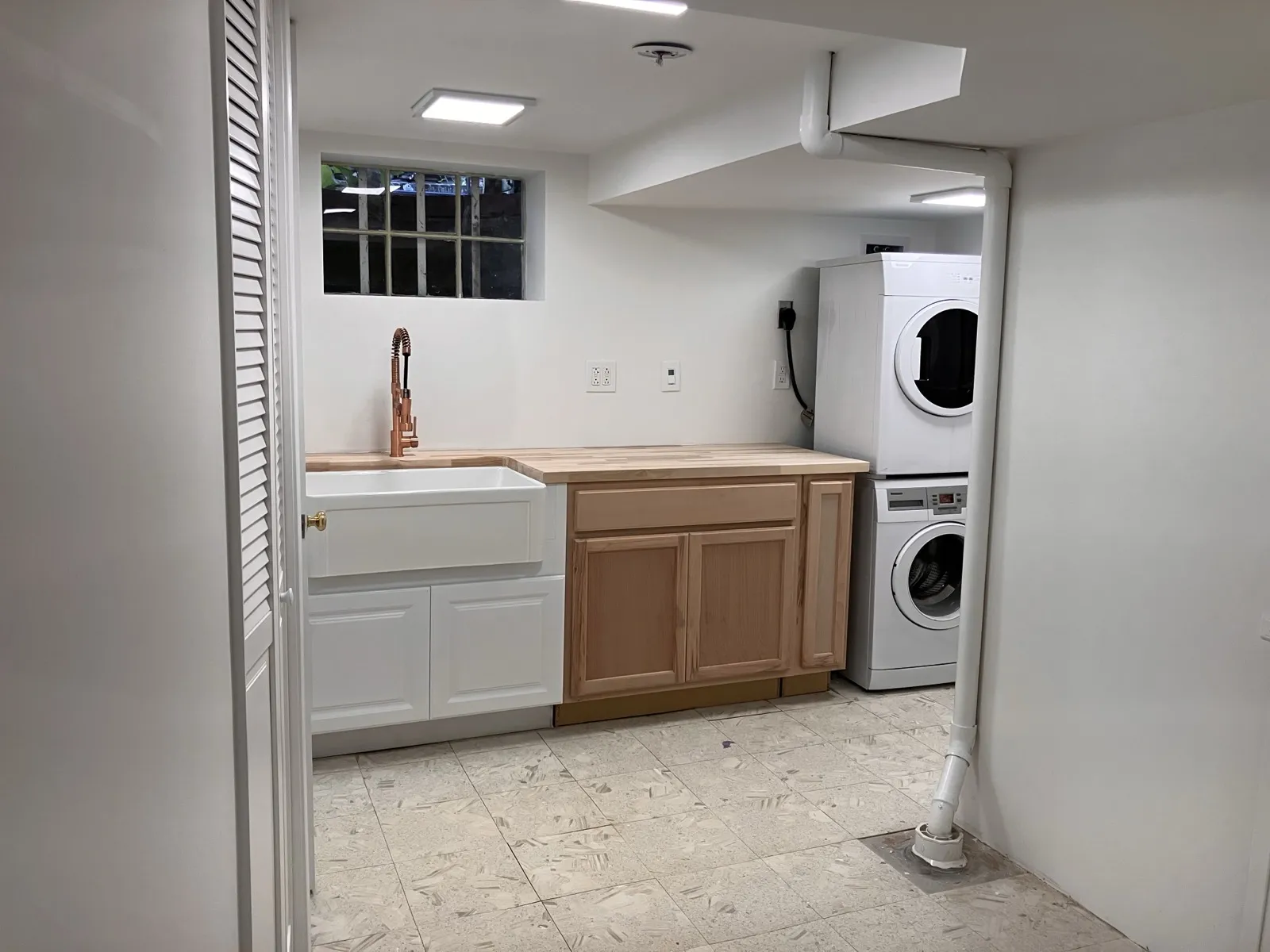
Which floor fits a basement, bathroom or kitchen?
It comes down to floor level and moisture. The National Wood Flooring Association says solid wood can go in any room on or above ground. It calls engineered wood ideal for basements. The North American Laminate Flooring Association says laminate suits almost any room, kitchens included. It calls bathrooms unsuitable unless the maker specifies the laminate as waterproof.
The wood group gives its reason: engineered floors expand and contract less than solid wood. HomeAdvisor’s hardwood guide also advises against hardwood in high-moisture rooms like bathrooms. In kitchens, it says installation is safe if you use water-resistant mats near the sink.
The laminate group allows laminate below grade, with a close watch on moisture. Over concrete, it wants the slab fully cured, at least 90 days old. It also calls for a 6-mil vapor barrier and underlayment padding every time.
Vinyl comes in sheets or in planks. The Resilient Floor Covering Institute says makers point to sheet vinyl’s waterproof build. For vinyl plank in a bathroom or basement, read the maker’s instructions for wet rooms and concrete before you buy.
What do tile floors cost, and where do they make sense?
HomeAdvisor’s tile guide puts bathroom floors at $300 to $1,300 and kitchen floors at $800 to $3,000. Tile labor alone runs $3 to $15 per square foot, or about $60 to $120 an hour. Floors often cost less to tile than walls, since floor tiles are larger and quicker to install.
Tile makes sense where water reaches the floor. HomeAdvisor’s hardwood guide steers wood away from bathrooms and laundry rooms. Its tile guide notes that a glaze makes ceramic tile more water resistant. The tile guide also says kitchens and bathrooms often cost more, because they need moisture-resistant materials and vapor barriers.
We set tile floors in bathrooms and laundry rooms, and we replace cracked tiles on floors already down. Our tile installation service page covers backsplashes and shower walls too.
Do old vinyl floors need an asbestos test before tear-out?
Get old vinyl checked before anyone pulls it up. The EPA lists vinyl floor tiles, sheet vinyl backing and adhesives among places asbestos may be found. It says a trained and accredited asbestos professional should take samples. Taking samples yourself is not recommended.
The risk comes from disturbing the material. The EPA says exposure may occur only when it is disturbed or damaged. It warns not to sand or try to level asbestos flooring or its backing. When asbestos flooring needs replacing, it suggests installing new floor covering over it, if possible.
A remodel that will disturb the material may require its removal. The EPA says removal must be done only by a trained and accredited asbestos professional. Your new floor goes in after that step.
How do you get a real number for your floors?
Measure each room, pick a material, then book a free estimate at the house. Multiply each room’s length by its width and add the rooms together. Run that total against the per square foot rows above for a rough range. The estimate adds what a tape measure can’t show, like the subfloor.
New floors can change the height at the wall and under the doors. Baseboard and shoe molding may come off for the install and go back on after. Our trim and door carpentry covers that step, including a door that drags on the new floor.
If the floor is one item on a longer list, see our guide to what a handyman costs in Maryland. We are family-run, licensed, bonded and insured, and we have worked across the DC, Maryland and Virginia area since 2008. Call (877) 349-4632 or set up a free estimate, and we will measure and price your floors at the house.